
What is breakdown maintenance?
Types of breakdown maintenance
Planned breakdown maintenance
- Run-to-failure maintenance strategy : Facilities managers adopt this strategy for predictable wear-and-tear items, such as light bulbs or small appliances, to save on unnecessary preventive maintenance costs.
- When to use planned breakdown maintenance : It’s ideal for assets that are inexpensive to replace, have readily available spare parts, or do not pose safety risks if they malfunction.
Unplanned breakdown maintenance
- Corrective maintenance : This involves repairing faulty equipment after failure and restoring it to optimal functionality.
- Reactive maintenance : Reactive maintenance addresses issues as they arise, often requiring rapid responses and emergency repairs.
- Emergency maintenance : A subset of reactive maintenance, emergency maintenance is performed when equipment malfunctions pose significant risks to safety, compliance, or production.
Advantages and disadvantages of breakdown maintenance
Pros of breakdown maintenance
- Cost savings on non-critical equipment : For assets like light bulbs or inexpensive components, breakdown maintenance eliminates the costs of unnecessary preventive measures.
- Reduced maintenance staff requirements: A reactive strategy enables you to concentrate maintenance efforts only when they are actually required.
- Simplified maintenance planning : Without detailed preventive schedules, planning becomes more straightforward for non-essential assets.
Cons of breakdown maintenance
- Increased downtime potential : Unexpected equipment failures can halt operations, leading to costly downtime.
- Higher critical equipment repair costs : For key assets, reactive maintenance often involves emergency repairs that are more expensive than proactive maintenance approaches.
- Safety risks and compliance issues : Equipment failures can create hazardous conditions or lead to violations of safety regulations.
A proactive approach, such as preventive or predictive maintenance , usually works best for safety-critical equipment and assets integral to operations. Reactive maintenance practices typically suit less essential items.
Implementing an effective breakdown maintenance strategy
Step-by-step guide for facilities managers
- Assessing equipment criticality : Evaluate which assets are vital to operations and prioritize those for preventive or predictive maintenance.
- Developing response protocols : Establish clear procedures for identifying, reporting, and addressing equipment failures to reduce reaction time.
- Training maintenance staff : Equip your team with the skills and knowledge to handle breakdowns effectively, including diagnostics and emergency repairs.
- Establishing inventory management procedures : Maintain adequate spare parts and tools to avoid repair delays, particularly for critical equipment.
Best practices and pitfalls to avoid
- Balancing breakdown and preventive approaches : Combine reactive strategies with preventive measures to minimize unnecessary downtime while controlling costs.
- Documenting maintenance activities : Keep detailed records of all maintenance actions to identify trends and optimize future strategies.
- Continuous improvement strategies : Regularly review and refine your maintenance processes based on performance metrics and evolving operational needs.
Breakdown maintenance vs. preventive maintenance
Key differences and similarities
When to choose breakdown maintenance over preventive maintenance
Breakdown maintenance allows facilities managers to conserve resources and manage assets better by not conducting unnecessary preventive efforts on low-priority items.
Hybrid approaches for optimal facility management
Role of CMMS in breakdown maintenance
A computerized maintenance management system (CMMS) can automate processes and provide real-time data. This can streamline maintenance workflows, reducing downtime.
Work order management
Asset tracking and history
Reporting and analytics
Analyzing breakdown maintenance data
Key performance indicators (KPIs) for facilities managers
- Mean time between failures (MTBF) : Measures the average time between equipment breakdowns, offering insights into reliability.
- Mean time to repair (MTTR) : Tracks the average time needed to fix equipment, highlighting repair efficiency.
- Overall equipment effectiveness (OEE) : Evaluates equipment performance based on availability, performance, and quality metrics.
Using data to improve facility performance
- Identifying recurring issues and root causes : Pinpoint patterns in equipment breakdowns to implement targeted solutions and reduce repeat breakdowns.
- Optimizing maintenance schedules based on historical data : Adjust maintenance plans based on past trends to service critical assets ahead of potential issues.


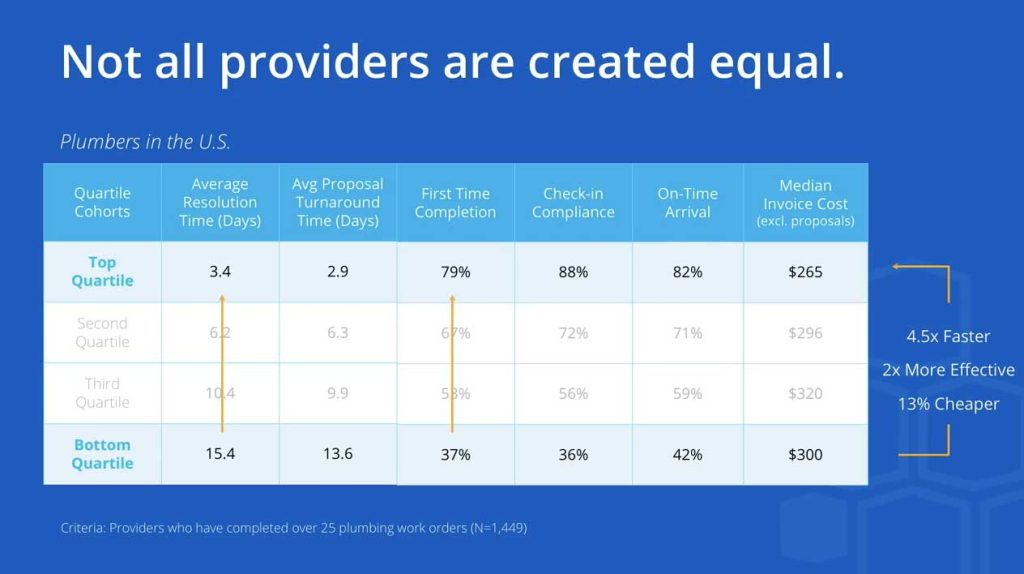
Balancing breakdown maintenance with other strategies
Create a comprehensive maintenance plan
Integrate breakdown maintenance facility management
Adapt strategies to fit your needs
Optimizing breakdown maintenance for your facility
Every facility is unique, and there’s no one-size-fits-all solution. Take the time to evaluate your assets, analyze maintenance data, and refine your strategies to strike the right balance for your operation. Adopt a technology solution like ServiceChannel for a more streamlined solution to centralize data and enhance decision-making across your maintenance team.